

Infusion Concepts research suggests practices should rethink infusion equipment.
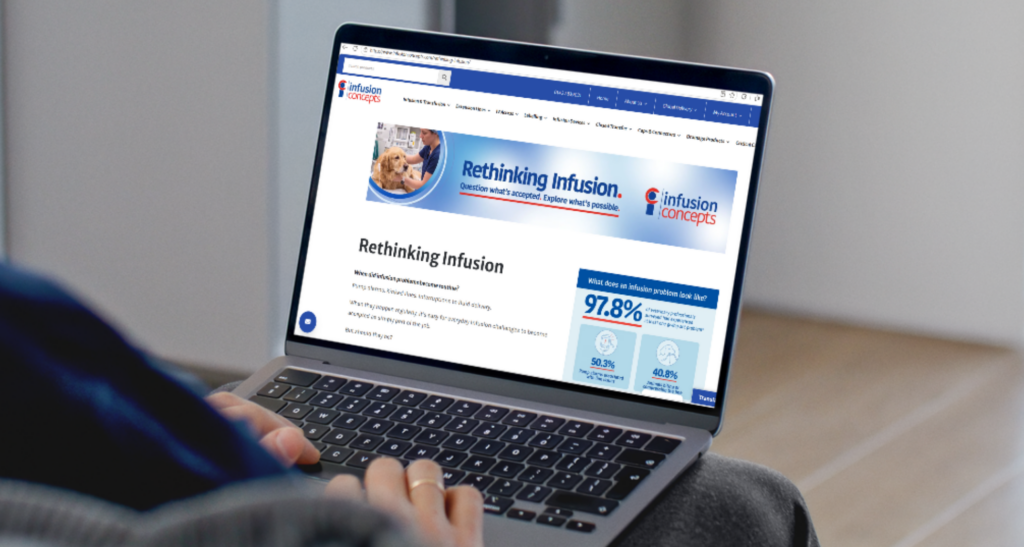
New market research from Infusion Concepts suggests that vet professionals may be accepting avoidable infusion problems in practice as normal. Infusion Concepts has launched a new campaign, ‘Rethinking Infusion’, providing resources designed to help veterinary professionals question whether common problems with infusion equipment really need to be accepted as part of everyday practice, and explore opportunities to improve equipment performance.
A survey and interviews with vets and RVNs carried out between May and July 2026 found that issues with infusion giving sets are routinely experienced in practice, with 97.8 per cent of respondents reporting at least one problem associated with giving sets, including pump alarms, line kinking, and animals biting or compressing lines.
Most respondents were using infusion equipment either daily or several times a week and nearly two thirds had experienced a failure with a real cost or time impact, such as giving sets having to be replaced mid-procedure or ordered at short notice. Nearly one third said this had happened more than once.
“There can be a ‘work-around’ culture around infusion equipment, where clinicians find ways to overcome common giving set problems so they can get on with delivering patient care. While these work-arounds may solve the immediate problem, over time they can also normalise equipment issues as an inevitable part of daily practice. When problems with giving sets are recurring, they create a genuine operational burden – but that doesn’t mean they have to be accepted,” said Sarah Dennis, Product Manager for Infusion Concepts.
Product reliability, including resistance to kinking, was ranked as the most important factor when purchasing giving sets. However, the research also found that many practices had inherited their infusion equipment manufacturer and may not have considered the alternatives available.
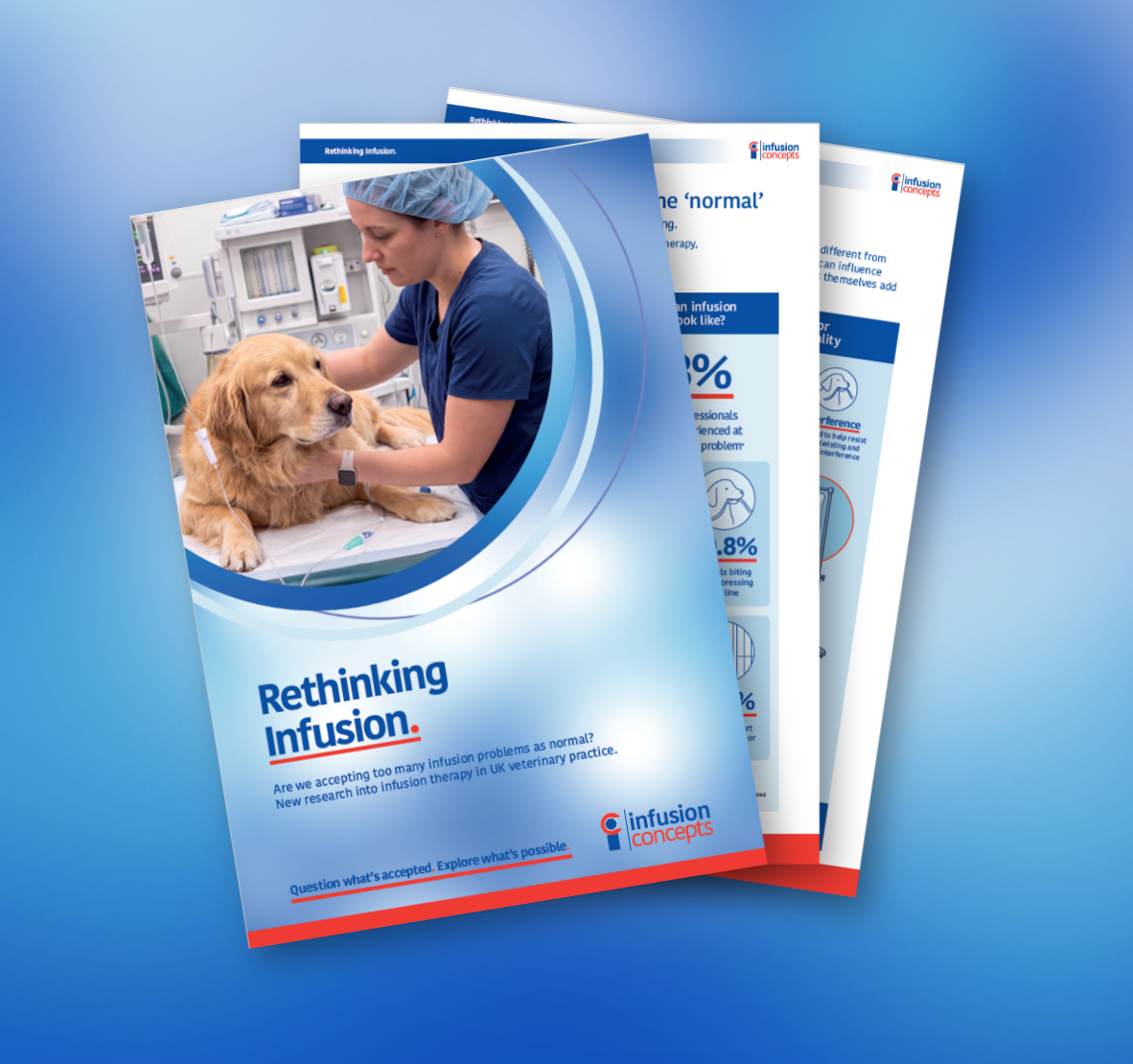
“Practices may not always be aware that veterinary-specific giving sets are an option, or that changing their giving sets doesn’t necessarily mean changing their existing equipment,” continued Sarah. “Veterinary-specific tubing, such as that offered by Infusion Concepts, is designed to be tougher and resistant to kinking and biting, with lengths designed to suit different kennel set-ups, helping to maintain flow when animals move or lie on the line. Infusion Concepts giving sets are compatible with commonly used infusion pumps, so practices may be able to benefit from veterinary-specific lines without replacing their existing pumps.”
The ‘Rethinking Infusion’ campaign is designed to encourage practices to take a fresh look at their infusion equipment, maintenance practices and clinical protocols. A dedicated online hub provides access to resources including myth-busting findings from the research. A new report explores the practical and technical considerations around infusion equipment, giving clinical directors and RVNs an opportunity to consider how their current approach compares with the wider profession.
A free webinar exploring practical clinical scenarios in infusion therapy will take place on 03 November at 12:30 featuring Alison Devonshire Grad Dip PCVN MSc (VAA) RVN and Sarah Dennis, Product Manager at Infusion Concepts. Using case-based scenarios, the session will explore factors influencing fluid selection, reassessment and adaptation of fluid therapy plans, and troubleshooting infusion set-up and delivery in the clinical environment. Participants will also have the opportunity to take part in live polls and a Q&A. Veterinary professionals can register for the webinar at: https://thewebinarvet.com/webinars/rethinking-infusion-are-we-accepting-too-many-infusion-problems-as-normal
“Infusion therapy is such a routine part of veterinary practice that it can be easy to accept familiar frustrations as simply part of the job,” commented Sarah. “Rethinking Infusion is about encouraging teams to question those assumptions and take a fresh look at their equipment, setup and protocols. If we can help practices identify avoidable problems and make infusion delivery more reliable and straightforward, that benefits the veterinary team and supports consistent patient care.”
Veterinary professionals can access the Rethinking Infusion hub, report and resources at: https://www.infusionconcepts.com/rethinking-infusion
Veterinary practices interested in exploring veterinary-specific infusion equipment can speak to the Infusion Concepts team at London Vet Show, where they will be available to discuss existing infusion set-ups and advise on options for moving to veterinary-specific equipment. Infusion Concepts will be exhibiting with NVS on stand L50.
Related Articles

December 4, 2024
KRKA UK announces winners of inaugural veterinary reception awards
KRKA UK has announced the winners of its inaugural...

January 29, 2016
Looking for ways to save money and improve customer service in 2016?
Whether it’s regular newsletters or adhoc news or alerts,...