

Parachex™ and IDEXX collaboration offers practices end-to-end, test-first parasite control
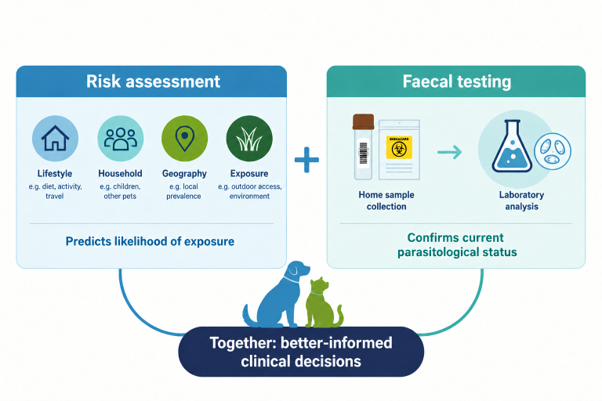
Parachex™ from Petpoint Health is now an end-to-end parasite risk assessment and faecal screening service, delivered in collaboration with global veterinary diagnostics company IDEXX and now available to UK veterinary practices. The combined service supports vet teams in moving from routine, blanket treatment towards more proportionate, risk-based prescribing – whether in everyday consultations or as part of a preventative healthcare plan.
Pet owners complete a digital risk assessment and collect a faecal sample at home ahead of their annual vaccination appointment. Laboratory results and tailored treatment recommendations are then returned to the practice in advance, so the vet team has the full picture before the pet enters the consulting room. All treatment recommendations are developed collaboratively with each practice and are fully aligned with their preferred in-house pharmacy products.
The diagnostic component utilises the IDEXX Faecal Dx® panel, which screens for a range of clinically relevant intestinal parasites including roundworm, hookworm, whipworm, flea tapeworm (Dipylidium caninum) and Cystoisospora. The addition of the new taeniid tapeworm antigen accurately detects the presence of Taenia crassiceps, Taenia pisiformis, Taenia taeniaeformis, Echinococcus granulosus and Echinococcus multilocularis.
Because the groundwork is done before the appointment, the service fits neatly into existing vaccination consultations and health-plan reviews. It is designed to cut parasite-prevention discussions from five to ten minutes to one or two, with prescribing decisions remaining with the veterinary team. For larger groups, it also supports consistent, practice-approved protocols across multiple sites.
Rachel Kirkby said: “Parachex™ has always been about giving vets better information before they prescribe. Our collaboration with IDEXX brings the whole journey into one service, from the owner’s risk assessment to the laboratory result. It allows practices to deliver a modern, evidence-led approach without the administrative overheads and time traditionally required. Over the longer term, the aggregated regional data will build a real picture of local parasite prevalence, helping practices keep refining their protocols based on what is actually out there.”
The collaboration comes as routine use of pet parasite medicines faces growing scrutiny. In August, the House of Lords Environment and Climate Change Committee published Paws for Concern: Pets, Parasites and Pollution, highlighting concerns about environmental contamination and the need for a more precautionary approach to treatment.
Ian McClive, Partner at Bishopton Veterinary Group, said: “At Bishopton Vets we have embedded the Parachex™ parasite risk assessment tool into all vaccination consultations, complemented by annual faecal testing for our health-plan members. Having this information available before the consultation allows us to have more meaningful, evidence-based conversations with pet owners about parasite prevention.
“We are already seeing a gradual reduction in overall parasiticide use while maintaining appropriate protection for pets and balancing animal health, human health and environmental considerations.”
To find out more about ParachexTM or to request a demonstration, visit www.petpointhealth.com or email support@petpointhealth.com.
Related Articles

May 17, 2022
Vetti learning portal launches to help vet teams develop marketing skills
Veterinary PR and marketing agency Companion Consultancy has announced...

October 7, 2021
Vetoquinol UK achieves bronze accreditation with Investors in the Environment
Veterinary pharmaceuticals company, Vetoquinol UK, has achieved bronze accreditation...